At some point, you gotta decide for yourself who you gonna be. Can’t let nobody make that decision for you.
Until a few days ago, I had only known Moonlight as the movie who won the Oscar in 2017 instead of La La Land. Do you remember the chaos on stage, when La La Land was announced as winner of Best Film and only during the thank you speeches, the error was corrected and Moonlight had actually won? Yes, that’s why I knew the film, but I hadn’t watched it. Now I have and now I understand why it deserved that Oscar.
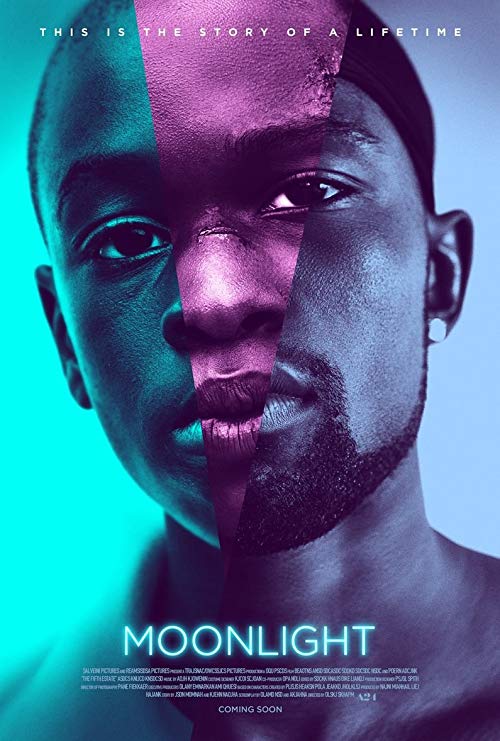
Moonlight was written and directed by Barry Jenkins and is based on Tarell Alvin McCraney’s unpublished play In Moonlight Black Boys Look Blue. The coming-of-age drama is told in three chapters.
In the first one, protagonist Chiron is a child in Miami who goes by the nickname “Little”. His mother Paula is a drug addict and not capable of raising him properly and he’s being bullied in school. When drug dealer Juan finds him hiding from his bullies, little Chiron finds a father figure in him and starts spending time with Juan and his girlfriend Teresa.
The second chapter explores Chiron’s teenage years. Meanwhile, Juan has died and Chiron still spends much time with Teresa, who’s now living alone. Paula has taken up prostitution to finance her drug addiction. Chiron starts to develop feelings for his only friend Kevin, who is coerced into beating Chiron the next day. Finally, Chiron starts to defend himself, which lands him in prison.
In the last chapter, Chiron is an adult, has moved to Atlanta with his mother, who is living in a drug treatment center there. He now goes by the nickname “Black” and deals drugs. When Kevin calls him from Miami, Chiron is reminded of his affection towards him and pays Kevin a visit.
The movie features an all-black (outstanding!) cast, was released in 2016 and stars Trevante Rhodes, André Holland, Jharrel Jerome, Ashton Sanders, Naomie Harris, Janelle Monáe and Mahershala Ali.
I’ve titled this post “A Story of Self- Awareness”, so let’s find out how I meant that chapter by chapter.
It all starts with the conflict of Juan and Paula. Juan is a drug dealer, who amongst others, sells to Paula. Paula then isn’t able to care for her son, as she’s always high and wasted. Juan on the other hand cares for Chiron lovingly, teaches him to swim, gives him food, talks to him about all kinds of things. The conflict then arises: is it Juan’s fault that Paula can’t do what he can do for Chiron? Of course not. If Paula didn’t buy from Juan, she’d buy from somebody else. Still, the situation is complex and in some way awkward. Does Juan have the right to feel better than Paula, cause he’s capable of caring for her boy? Again, no. Cause he’s one of many drug dealers who are, in some (again very complex) way, responsible for Paula’s and other addicts’ misery. Do you get how twisted this all is?
That’s where we come to the awareness of one’s own self and of one’s own responisbility. Juan gets it. He gets that he’s responsible for his own life and he might sell drugs (which isn’t exactly the right way to live, I agree, but still…), but he doesn’t abuse them and is able to live a normal life (despite his profession). Paula doesn’t get it. She throws her life away and in the end, this is her own fault. Yes, the community she’s living in, people like Juan who supply her illegally, all these people share a certain blame. But in the end, everybody is responsible for his own actions and so is Paula.
There’s a key scene between Juan and Little/Chiron in the first chapter: the one in which Juan teaches the boy how to swim. It is essential for the outcome of the story, for Chiron’s future, that Juan teaches him. The ability to swim is something you might need to survive, right? So Juan teaches Chiron how to survive (yes, I know, in a very far-fetched way, but stick with me here). Additionally, Juan teaches it to him his way. And in real life, Juan’s way of surviving is being all badass and bossy and showy… in short: he survives by being a respected drug dealer. Remember what I told you before about chapter three? Right, Chiron himself tries to escape his situation by becoming just that – a reputable drug dealer. It’s almost like Chiron is baptised with Juan’s abilities. In another scene at the ocean, Juan tells Chiron that “In Moonlight, black boys look blue”. But what does that mean? It means, that moonlight strips you of what you’re pretending to be. Moonlight brings out your true, innermost self, your secret self, that you might be hiding in daylight.
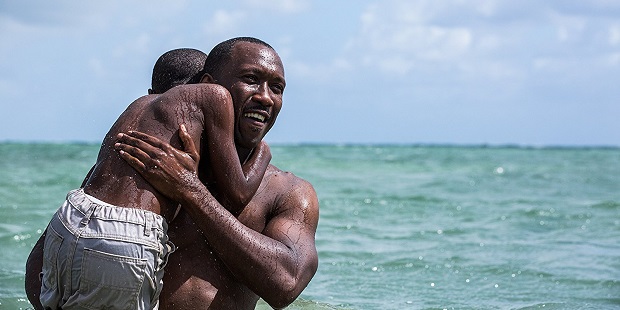
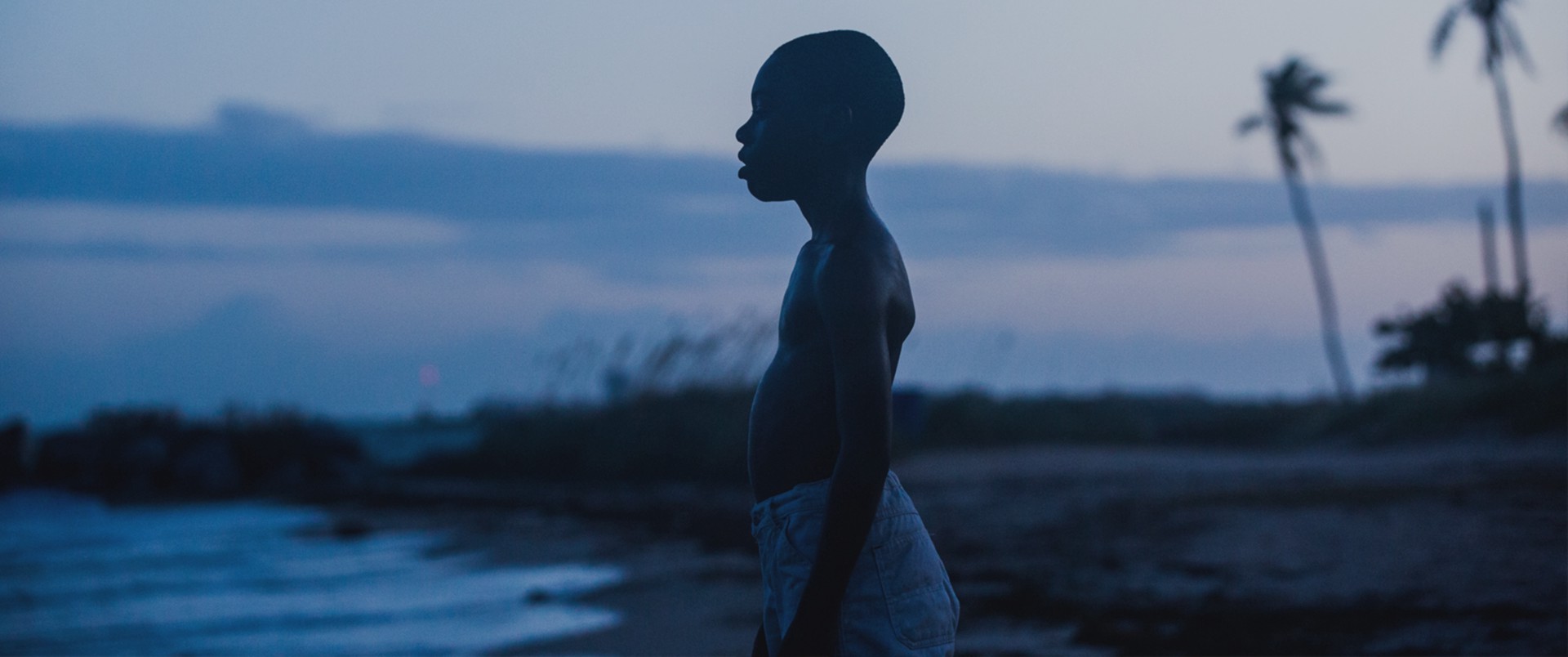
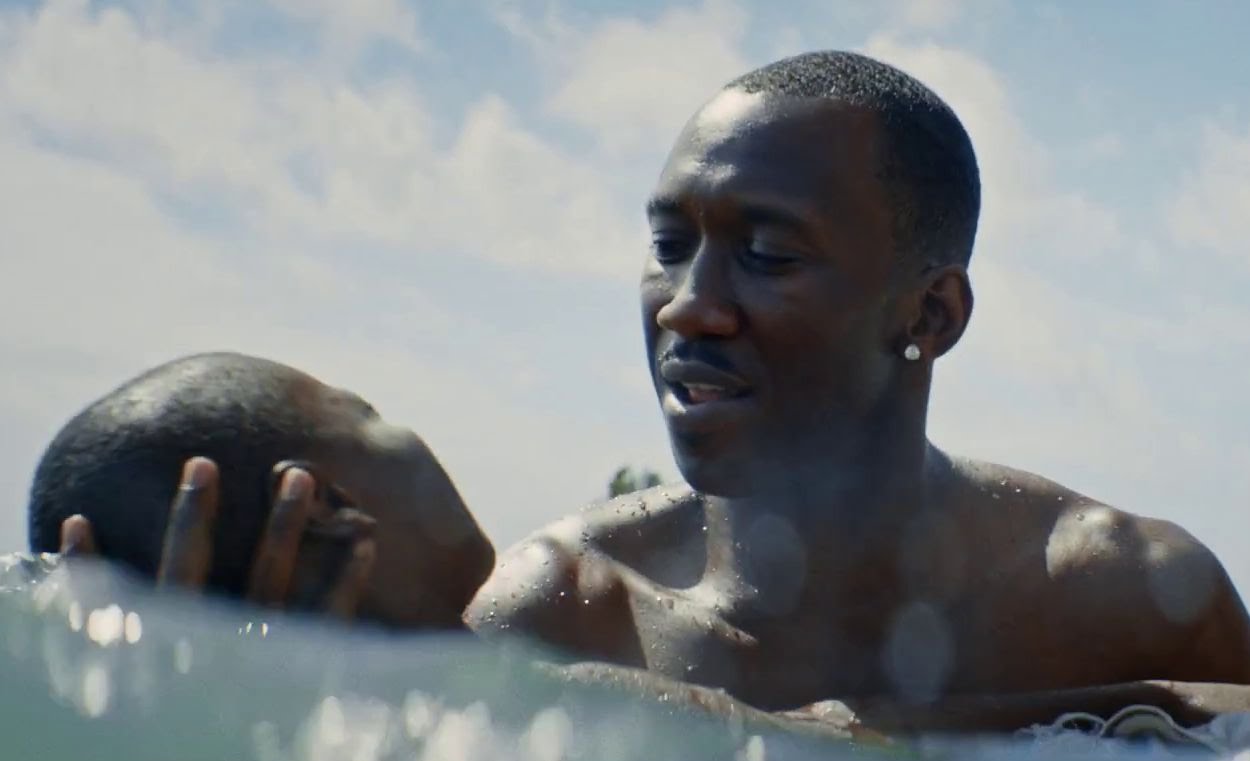
This brings us to chapter two. As a teenage boy, Chiron discovers things about himself, he himself and others don’t understand. He shares an intimate moment with Kevin at the ocean (again, we come back to the ocean, it seems to be a crucial place for crucial moments!). Chiron discovers his homosexuality, but he doesn’t understand it as the community he’s living in doesn’t accept these kinds of feelings and so he might not even know what it is exactly that he is feeling for Kevin. So he hides his true self and pretends to be somebody else, trapped by society’s expectations of masculinity he cannot fulfill. Only when he finally strikes back, breaks out of his shell and hits back his bullies, all the rage that has been boiling inside his passive self bursts out.
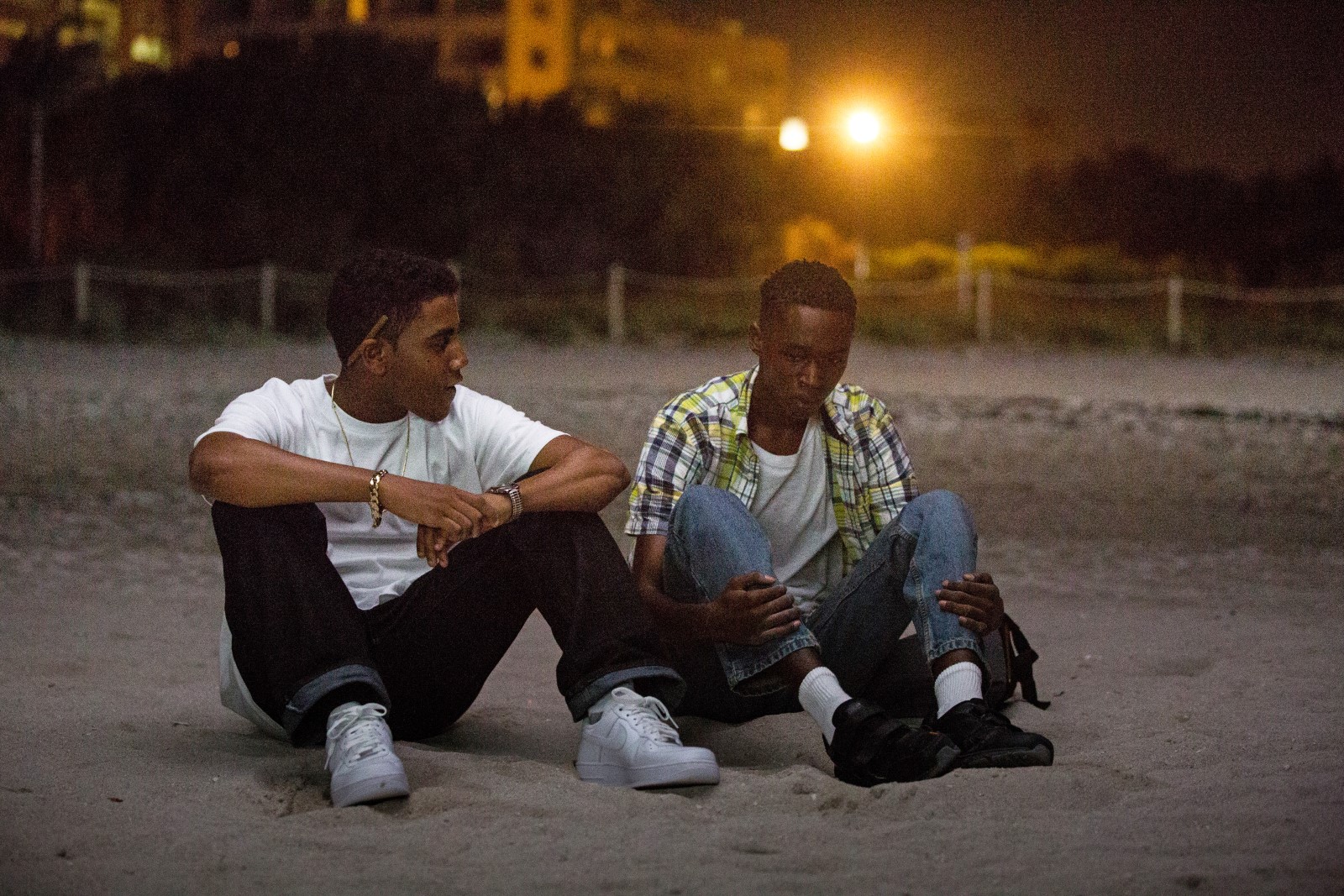
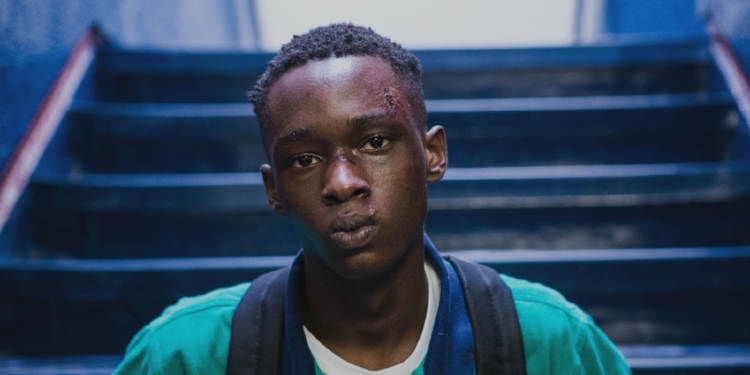
As an adult, Chiron calls himself “Black”. As we’ve seen before, moonlight makes you look blue and blue describes your real self. Black then, can only be a disguise. We’re instantly confirmed that we’re right with that assumption when we see the adult Chiron. Back then he was gawkish, weakly, now he’s a real muscleman, wearing golden grillz, driving a fancy car and living in a fancy apartment. He’s also wearing Juan’s bandanna (or whatever you might call that thing?), stating again that what he is now, he’s learned from him, that he’s imitating his former father figure. But the truth is: it is not him at all. Deep down he knows that, he’s just suppressing it. He’s fighting his former self “Little” by denying who that self, Chiron, has turned into. He’s not being blue, but black. Only when he hears from Kevin does he realise that he might not have changed for the better. It takes another person, Kevin, to tell him that this “Black” doesn’t suit him. That it isn’t him, it isn’t the Chiron he got to know, got to love maybe.
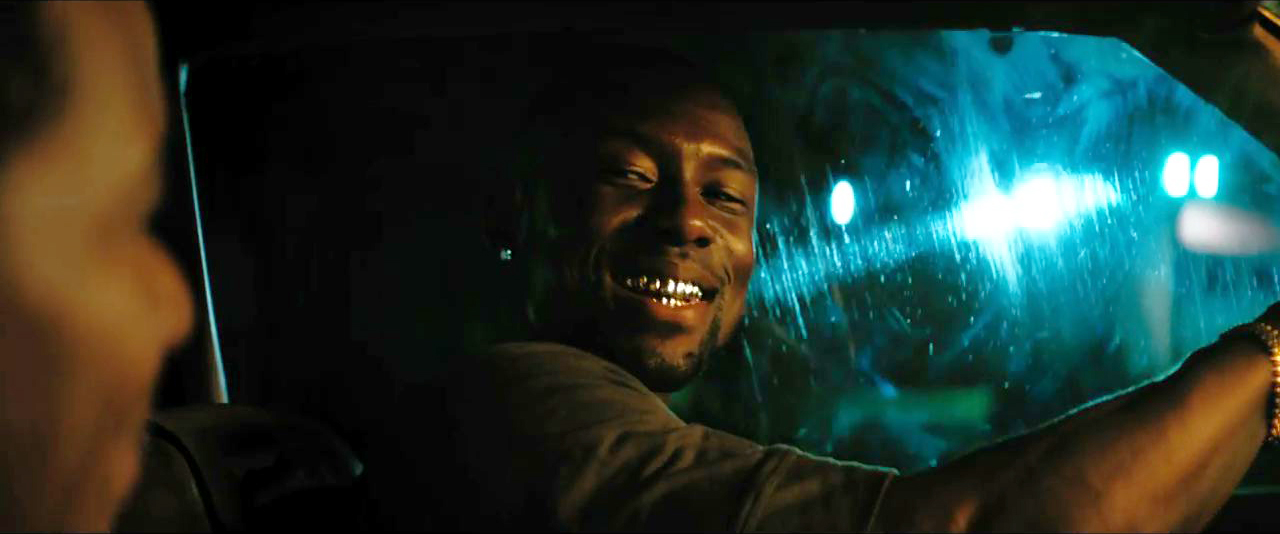
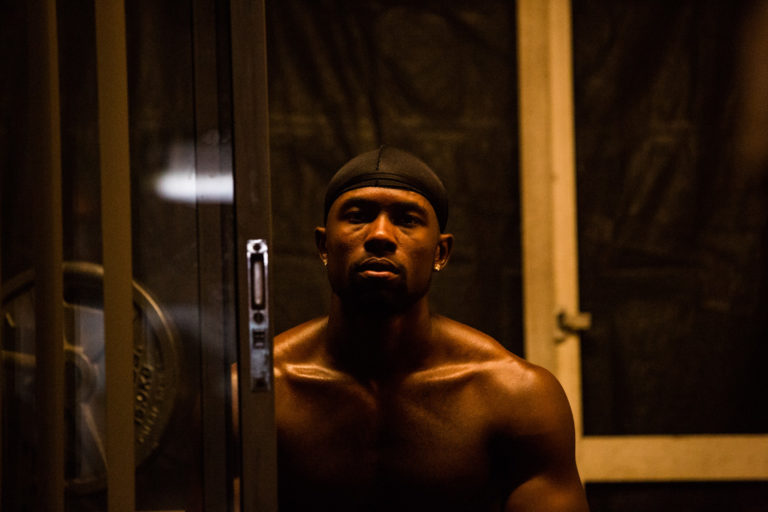
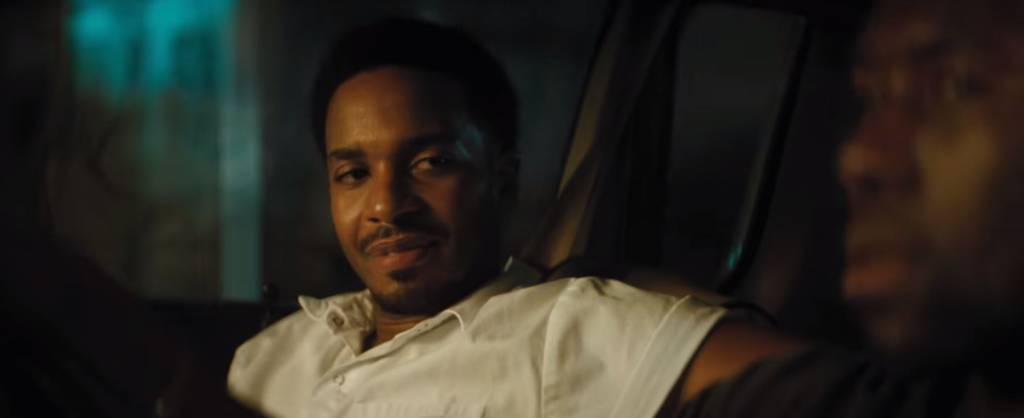
Here’s where we come full circle with the whole self-awareness thing: Just like Juan, who chose to be a drug dealer and died (we don’t get the reason, but we can assume); just like Paula, who chose to be a drug addict and is full of regret and sorrow in the end; just like Kevin who chose to make it right and get a life after prison, get a job and an apartment; just like all these people who were or weren’t aware of their true innermost self, of their “blue self”, he has to chose who he wants to be. Does he want to stay black, or start being blue finally?
Clearly, Moonlight is a story about the self, about decisions and regrets, about the influence of the community you grow up in and about the people who love you. Cause those are the only ones that can really help you and get you back on track. For me, it took some time to understand all this and to understand what a valuable piece of art this movie is. Now I do and now I can say, giving that Oscar to Moonlight instead of La La Land was the right decision.
If you want to dig a little deeper into the intentions of the incredible cinematography of the movie and of other symbols I didn’t talk about, check out this video. It’s amazing!
All pictures used in this post are copyrighted by A 24!
 sarahtalksfilm