How the magic started and developed
“No art passes our conscience in the way film does, and goes directly to our feelings, deep down into the dark rooms of our souls.”– Ingmar Bergman
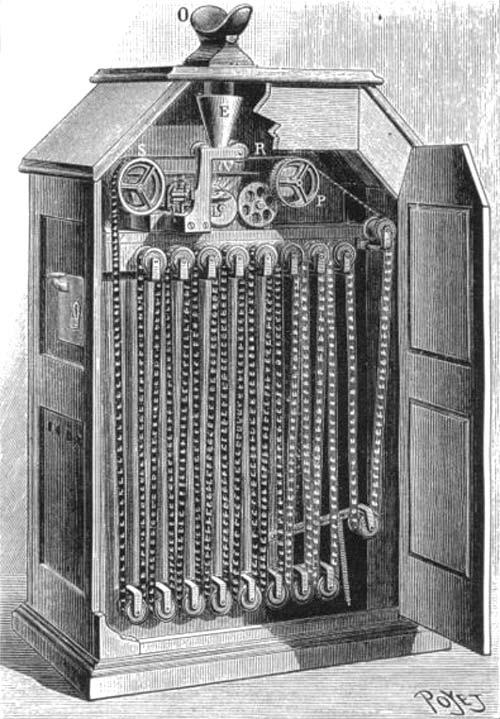
It all started with this: the kinetoscope, developed by Thomas Edison in 1891. This predecessor of modern movie projectors was designed as a cabinet with a peephole on top, through which one person at a time could watch moving images. As you can see in the image above, there was a celluloid film strip, spooled between a lens and a light bulb. Edison’s company installed kinetoscopes in public places and opened kinetoscope parlors around the United States. However, he refused to invent kinetoscopes that could project images on screen for a larger audience.
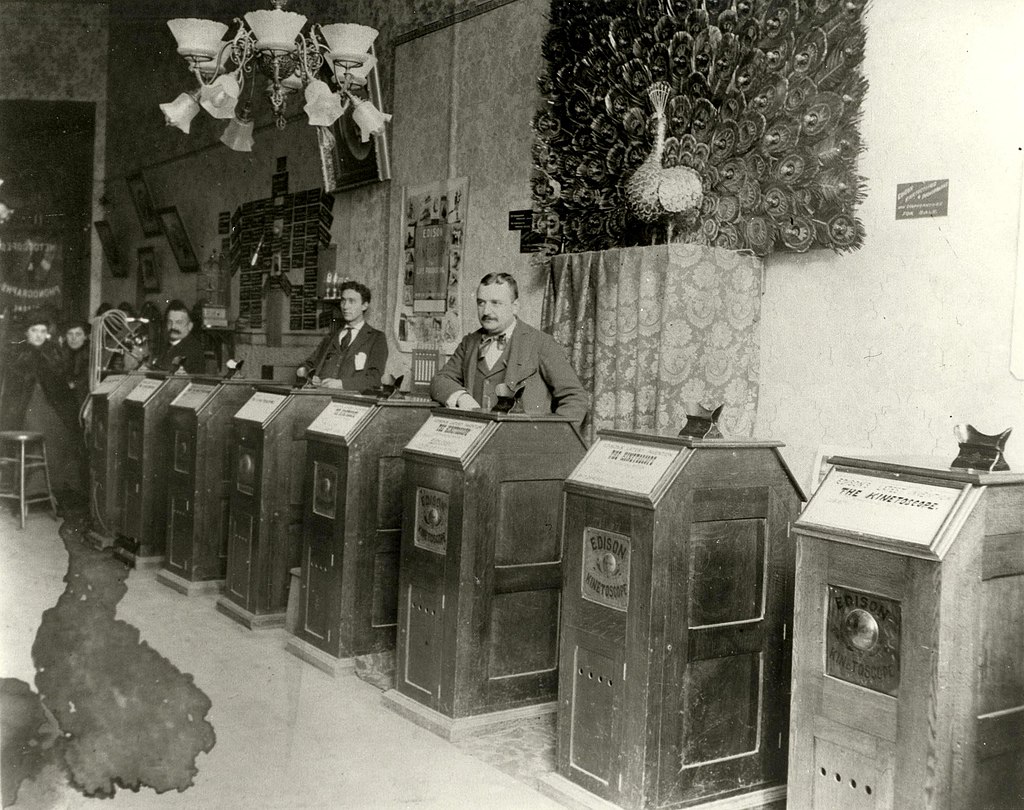
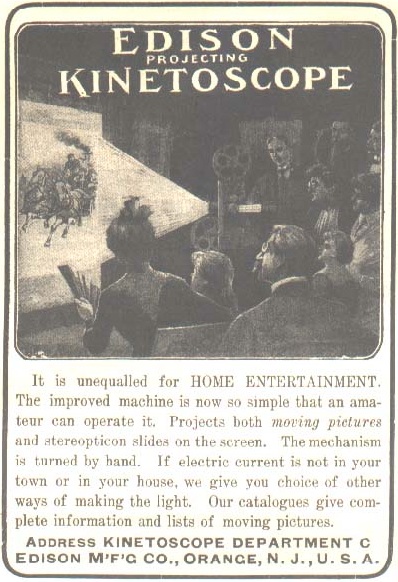
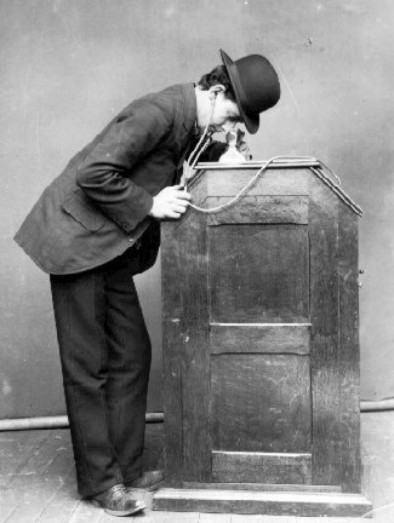
The first U.S. identifiable motion picture that received U.S. copyright was made on a kinetoscope. It’s the five second clip of an Edison technician sneezing, widely known as Fred Ott’s Sneeze. Watch it here.
In 1895, the brothers Auguste and Louis Lumière, who manufactured photographic goods in Lyon, France, patented the cinématographe. This film camera also served as a projector and printer and was much lighter than the kinetoscope.
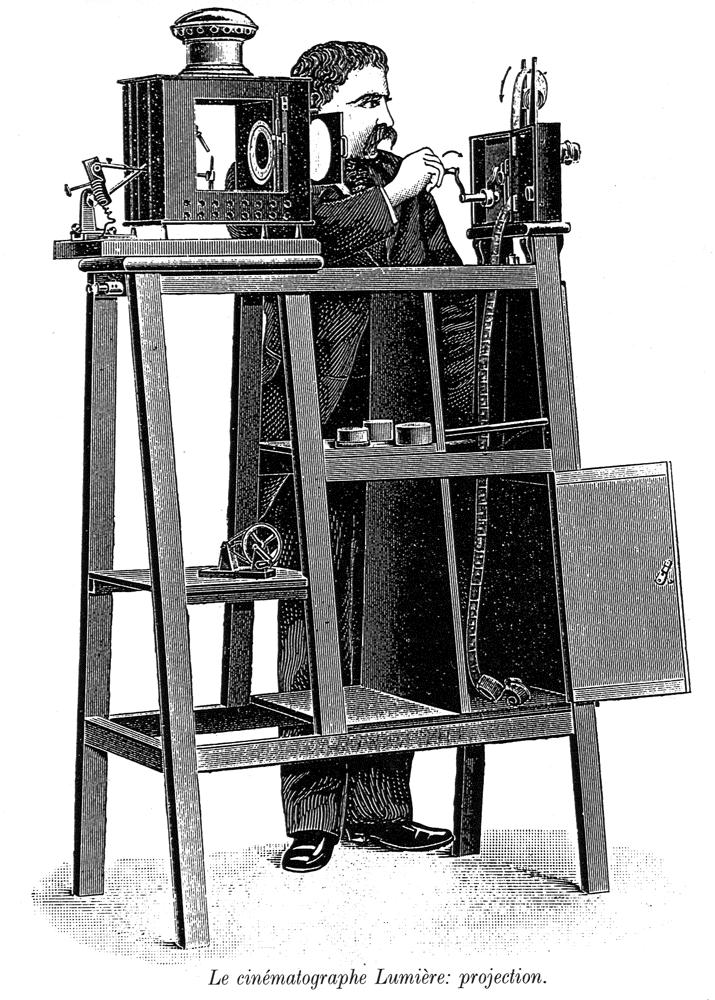
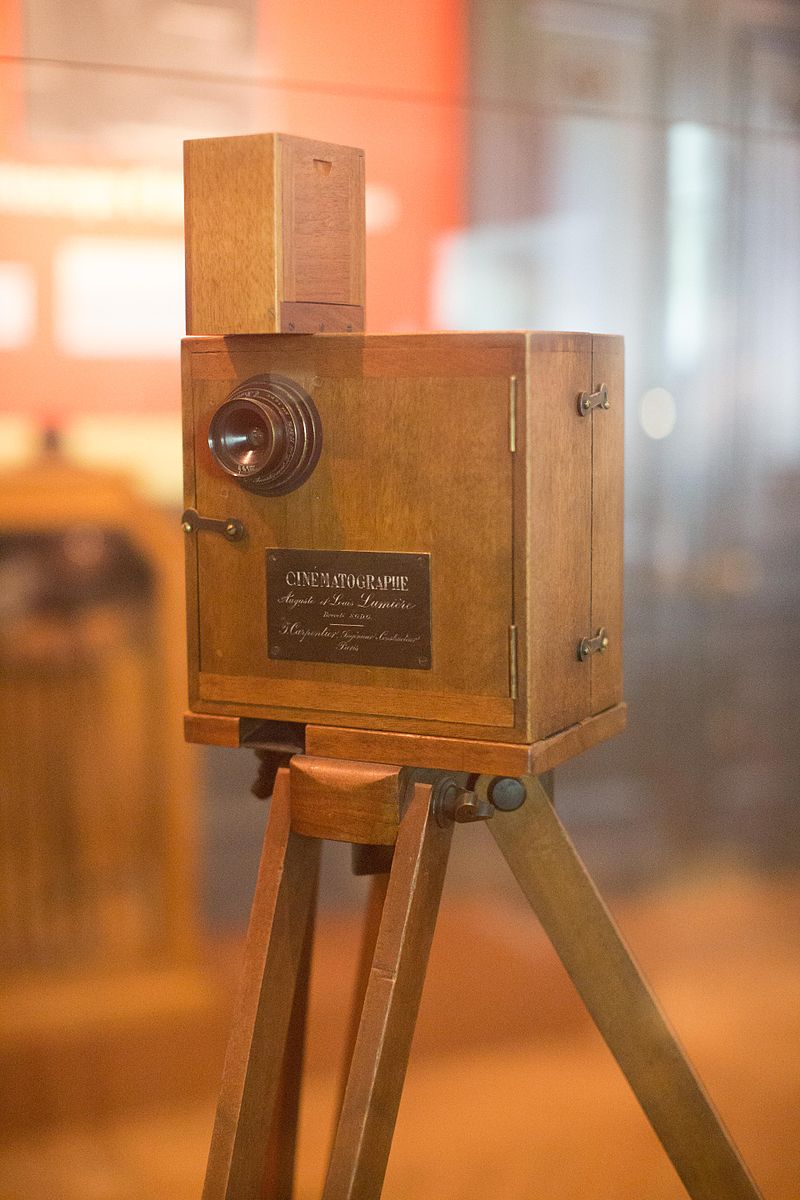
Pictures taken from Wikipedia
Auguste and Louis Lumière organized the first ever commercial film screening. It took place in 1895 in the Grand Café in Paris. As the brothers filmed more than thousand short films with their cinematographe, they had quite a variety to show, and selected ten of their films for this special movie night. Among those was their very first film, Workers leaving the Lumière Factory.
In this early stage of cinema and motion picture, people were incredibly fascinated by this new form of entertainment. Movies didn’t tell stories yet. They simply showed everyday scenes, like a man sneezing and workers leaving the factory, trains entering a station etc. Today, we might not be able to relate to this kind of fascination, as it sounds immensely boring to watch people just walk out of a factory. I mean, you see this every day, right? No big deal. Well, back then it was. Cause it was just new. Nobody had ever seen a train rolling towards himself on a big screen. In fact, some people were scared of this new form of watching images. Some even fled the cinema in shock.
As the technical aspect was far more interesting back then than the actual movie, it was usually the projectors that were advertised at screenings, not the movie titles.
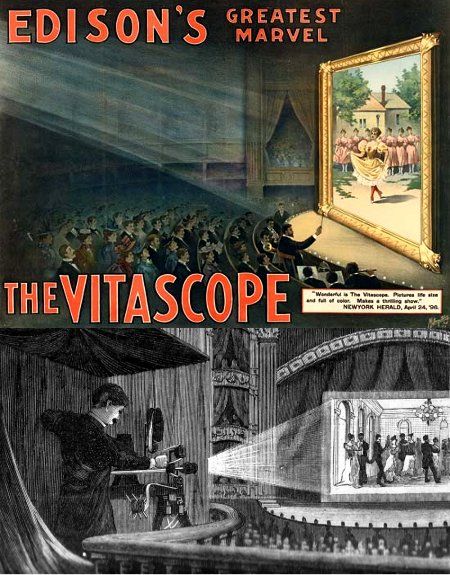
Image Source
The big breakthrough came with George Méliès, a French magician and film director. He introduced audiences to film as a narrative medium, as we know it today. Before Méliès, film makers had only made short movies in a single shot, that didn’t take longer than a minute. Méliès was the first to actually put different scenes together in order to tell a story. He was also the one who invented and experimented with special effects. His movies were very artistic and fantastic. Méliès’ most prominent movie from 1902 is called A Trip to the Moon. The adaptation of Jule Verne’s novel features 30 scenes.
If you’ve watched the movie Hugo Cabret by Martin Scorsese (Paramount Pictures, 2011), you already know a lot about Georges Méliès and his movies, as the protagonist Hugo gets to know Méliès many years after his great success.
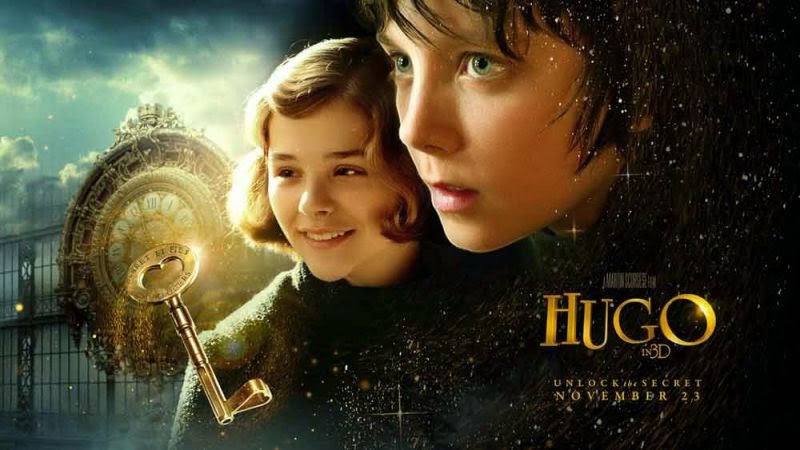
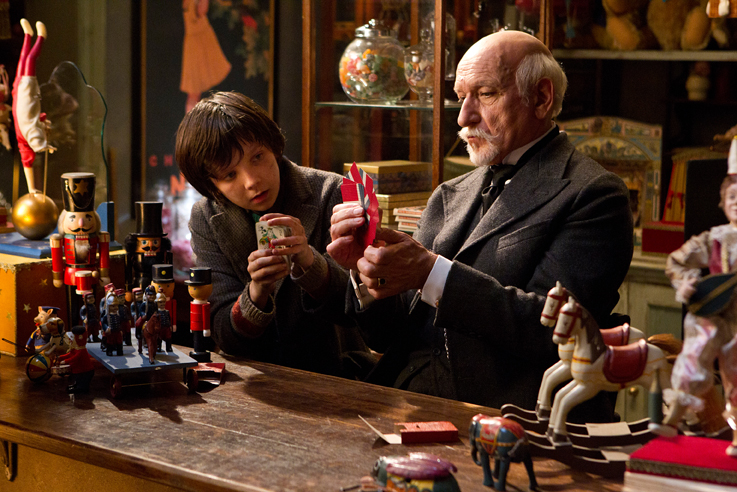
Pictures copyrighted by Paramount
Méliès’ movies were always filmed as if the camera’s lens was the viewer’s eye in a theatre. You were always looking at a stage on which the action took place. The camera never moved. Thus, as people’s tastes are fast moving, they eventually lost interest in his productions and he disappeared from cinemas after his last work The Conquest of the Pole (1912).
After, or rather already during, Méliès’ time, filmmakers became more innovative with their techniques. One of them was Edwin S. Porter, who worked with the Edison company. His 12- minute- film The Great Train Robbery from 1903 introduced audiences to techniques like editing, diagonal camera angles, rear projections and camera pans. This form of cinema came ever closer to our modern understanding of it, as it told stories through more realistic technical productions than Méliès’ staging. The Great Train Robbery was the first ever box- office hit and made investors realize cinema’s immense financial potential.
John P. Harris and Harry Davis were the first ones to open a movie theater in 1905 in Pittsburgh, naming it the Nickelodeon, as the admission was only five cents, a nickel. By 1908, thousands of Nickelodeons had been opened in North America.
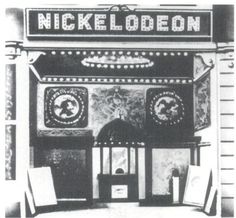
Image Source
Until the early 20th century, films were always produced on a single reel and thus only lasted about a quarter of an hour. Starting around 1912, the feature film was slowly established. Production companies realized that they could make more money with longer films, as people were willing to pay higher admissions for longer- running movies. Additionally, it was regarded as more sophisticated to narrate longer stories, as they allowed for more complex storytelling.
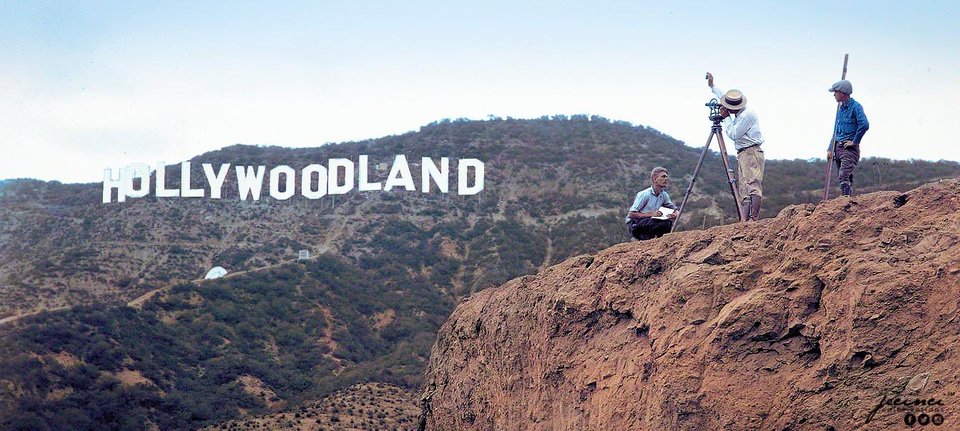
As the medium of film became ever more prominent, producers asserted that they could only meet the demand of the audiences and keep the money flowing, if they produced all year round. Till then, the main filming locations in the US had been New York and Chicago, everything was filmed on location. The demand for studios to shoot the movies arose and soon the perfect spot for it was found – Hollywood, a small suburb of Los Angeles. As this place proved to be close to every kind of topography (mountains, lakes, ocean, forests), had temperate climate and the land there was cheap, Hollywood became the hotspot of America’s film industry.
By the way, did you know that the famous Hollywood Sign had actually been installed in 1923 to advertise a new subdivision that was called “Hollywoodland”? After it had fallen into disrepair, it was restored and the last four letters taken down in 1943.
Another breakthrough in the history of film came from Warner Bros. The company had purchased the Vitaphone technology and thereby replaced the silent film. Till then, films had often been accompanied by a live orchestra. In 1926, Warner Bros. premiered Don Juan, a costume drama that featured a prerecorded score by the New York Philharmonic Orchestra. By 1930, the silent film was water under the bridge.
Not only sound experienced a breakthrough in the 1920s. The coloring also changed. Or rather, it finally emerged. Before, movies had been in black and white. In 1922, Herbert Kalmus’s Technicolor company invented a technique that allowed for movies to be made in two primary colors. Movies that were made with this technique are, amongst others, The Toll of the Sea (1922) and The Ten Commandments (1923).
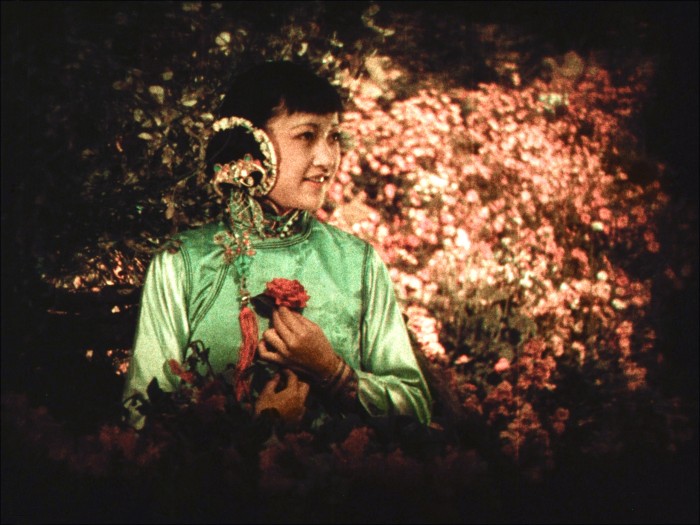
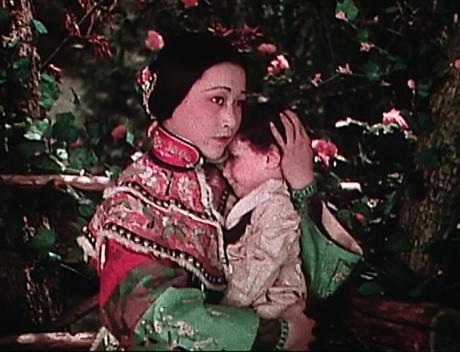
Stills from The Toll of the Sea
Copyrighted by Metro Pictures Corporation
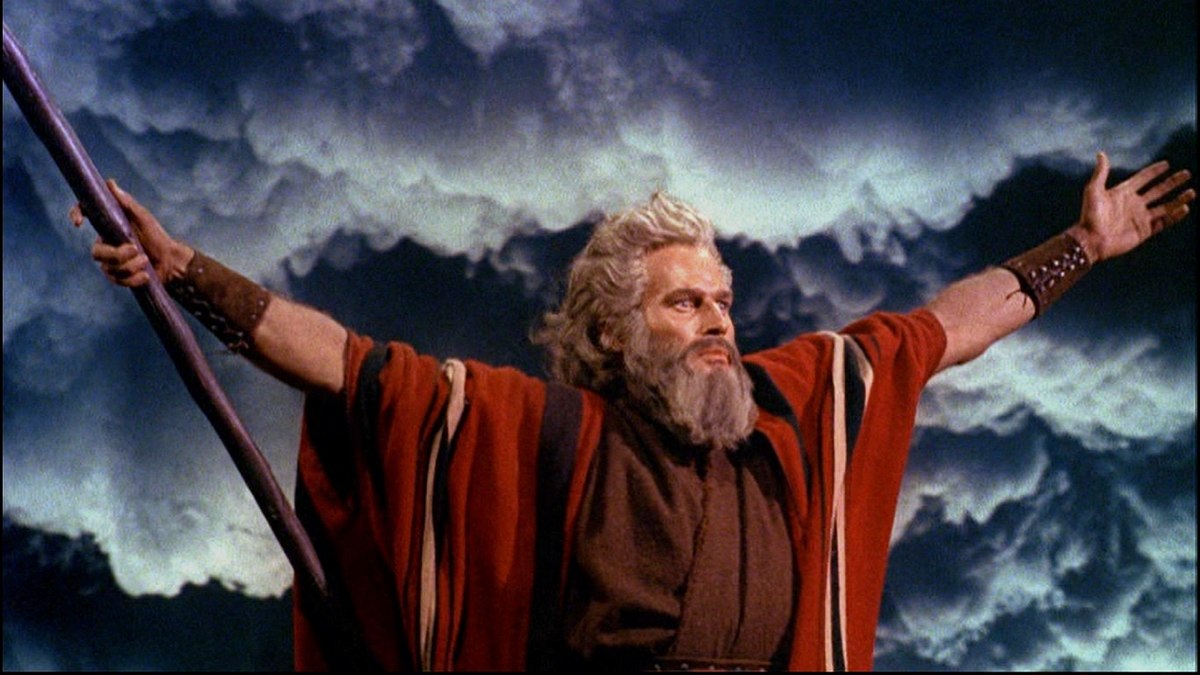
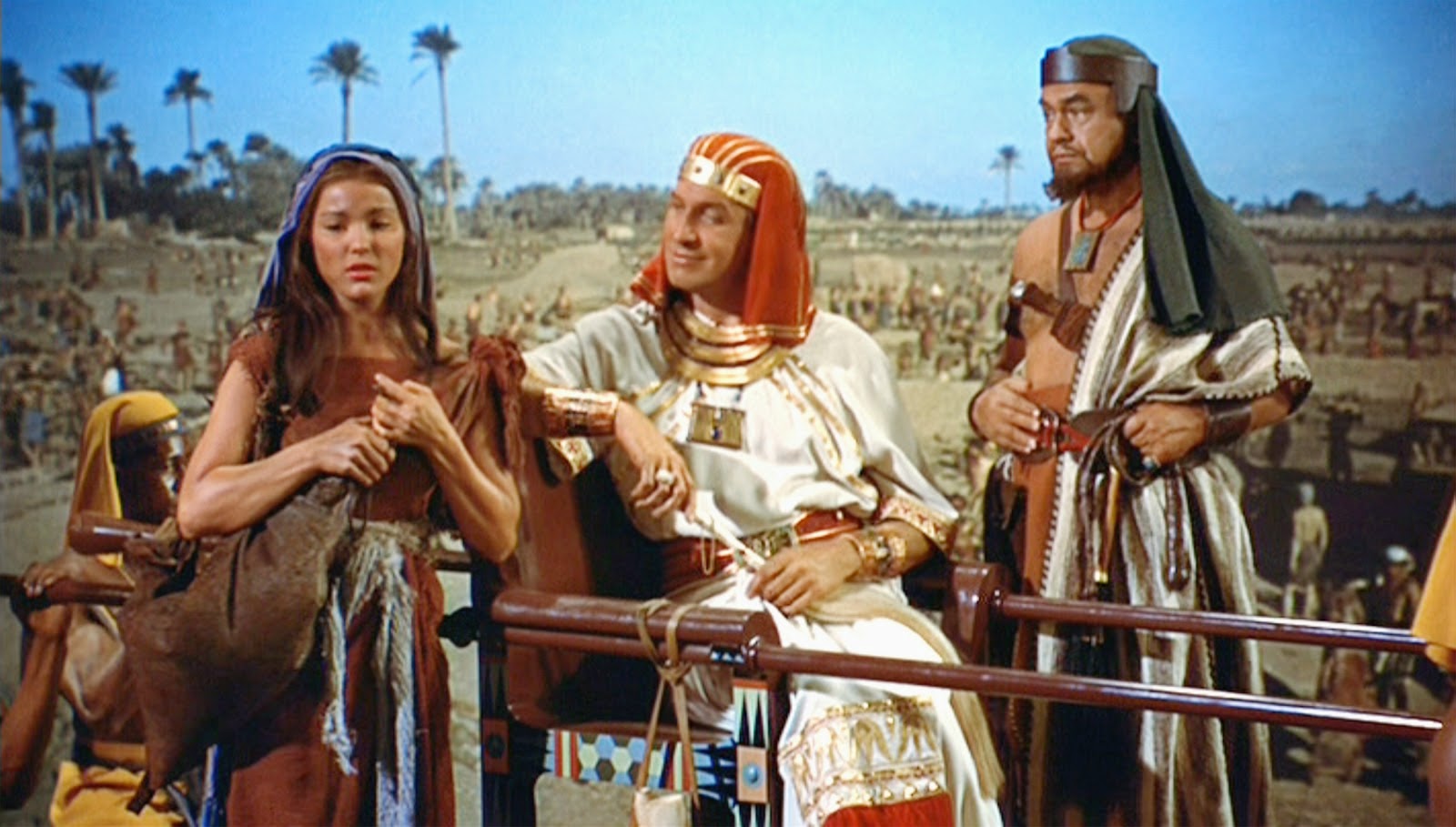
Stills from The Ten Commandments
Copyrighted by Paramount Pictures
Using only two primary colors was definitely an improvement to black and white. Still, you can see from the pictures that it wasn’t very lifelike yet. By 1932, Technicolor had developed a system that used three colors, making the pictures more realistic. Films made with this technique include Gone With the Wind (1939) and The Wizard of Oz (1939).
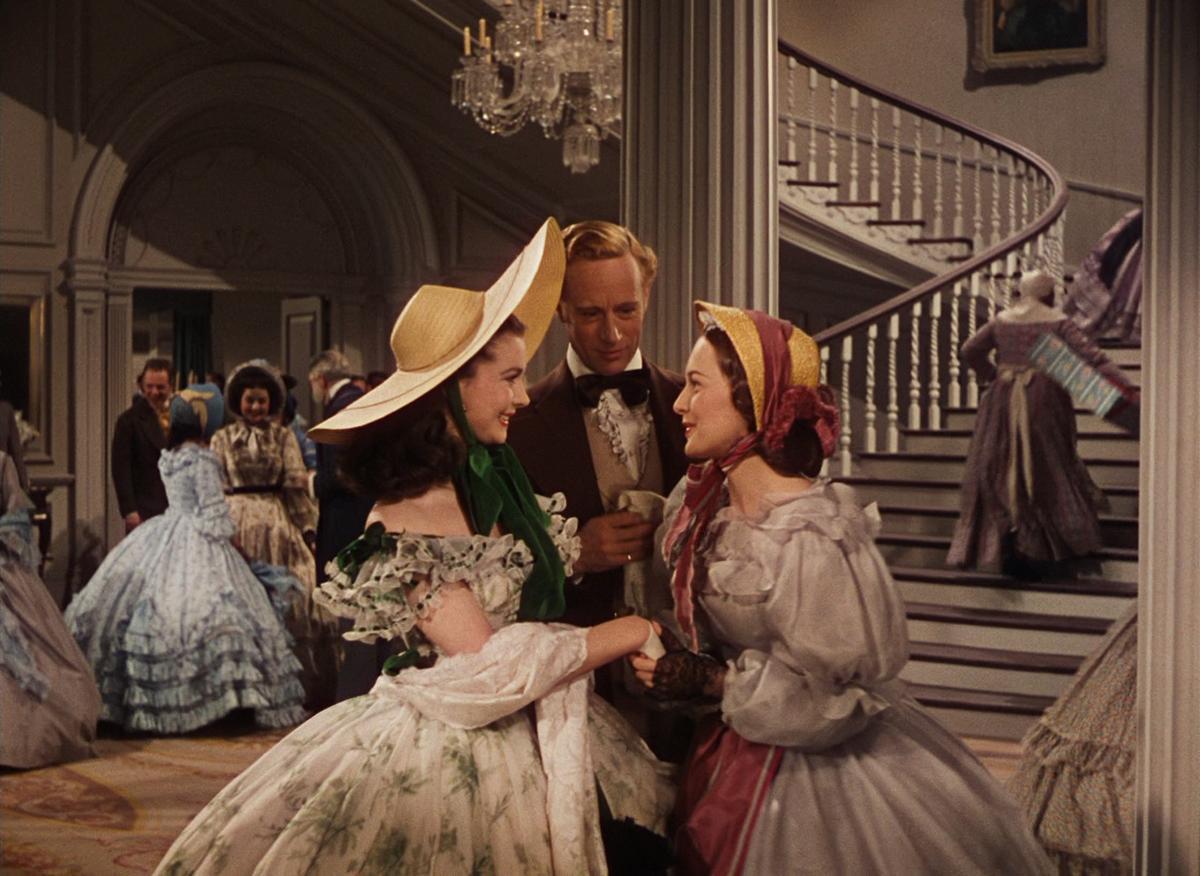
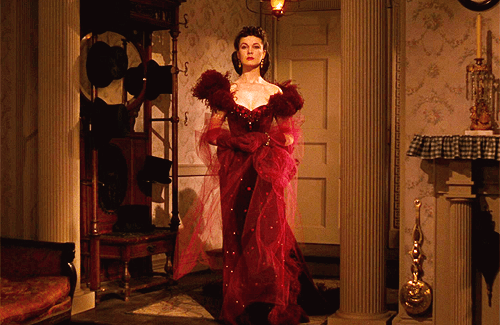
Stills from Gone With the Wind
Copyrighted by Loew’s Inc.
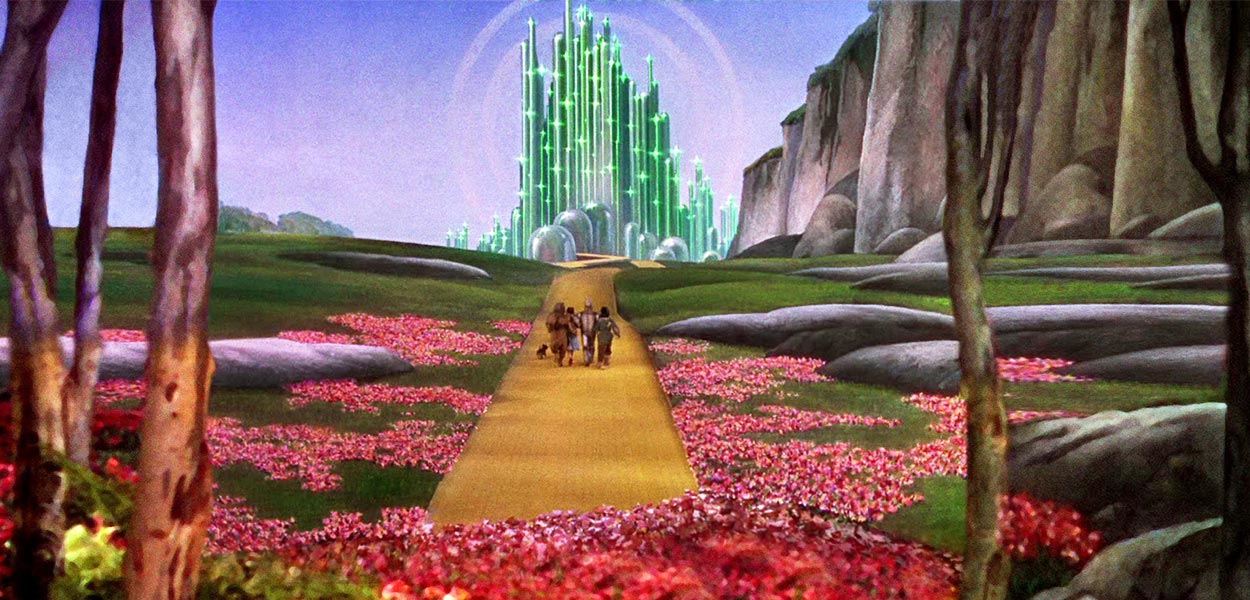
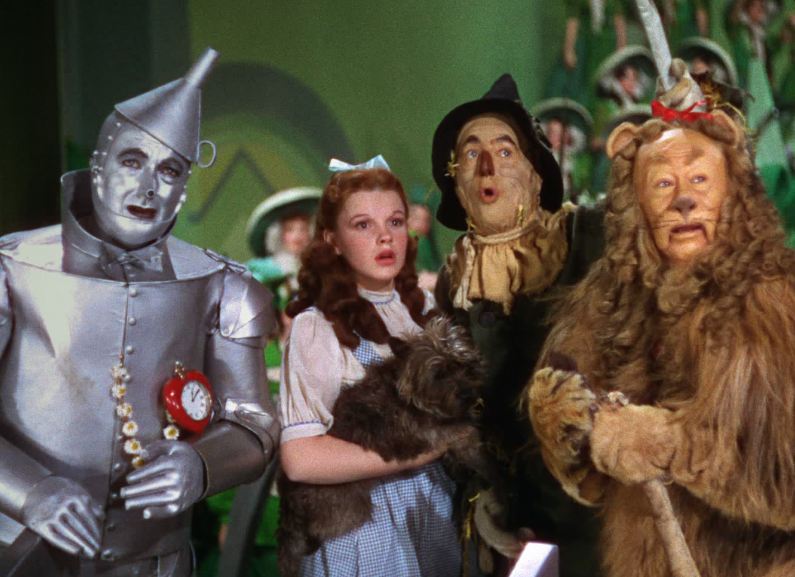
Stills from The Wizard of Oz
Copyrighted by Loew’s Inc.
As a result of the Great Depression, the Technicolor technique didn’t replace the black and white film until the 1940s. However, it was still very expensive at that time. When Kodak released Eastmancolor, its multilayer film option, that was cheaper than Technicolor (as it allowed for more affordable cameras to be used with the technique), color film was finally fully established (except on television, but that story would need an extra blog post 😀 )
By the 1970s, film had been present for almost a century, which resulted in a new age of directors: the “film- school directors”. They didn’t just experiment with new techniques anymore and had to work with what the industry offered (like only silent films or only black and white films). These directors, like Steven Spielberg, Francis Ford Coppola, George Lucas or Martin Scorsese, had been educated in film schools and thus already knew their handicraft when they entered the market. Of course, for example Spielberg, had already grown up with an affection towards film and received the first awards for his work as a teenager. So, not everything was only owed to film school education. Still, these directors already had idols they could learn from, as by that time there had been quite a lot of directors and movies they grew up with. Their movies thus were sophisticated and technically advanced and became Blockbusters. Accordingly, film distribution emerged, making those great movies like Jaws (1975) available to a much bigger audience simultaneously. Following blockbusters like Star Wars (1977), also fuelled the production of sequels and remakes/adaptations of earlier productions.
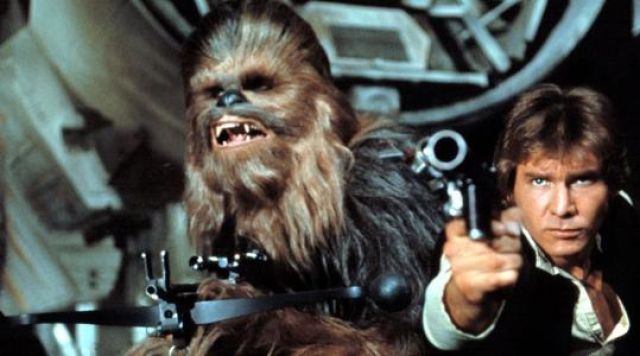
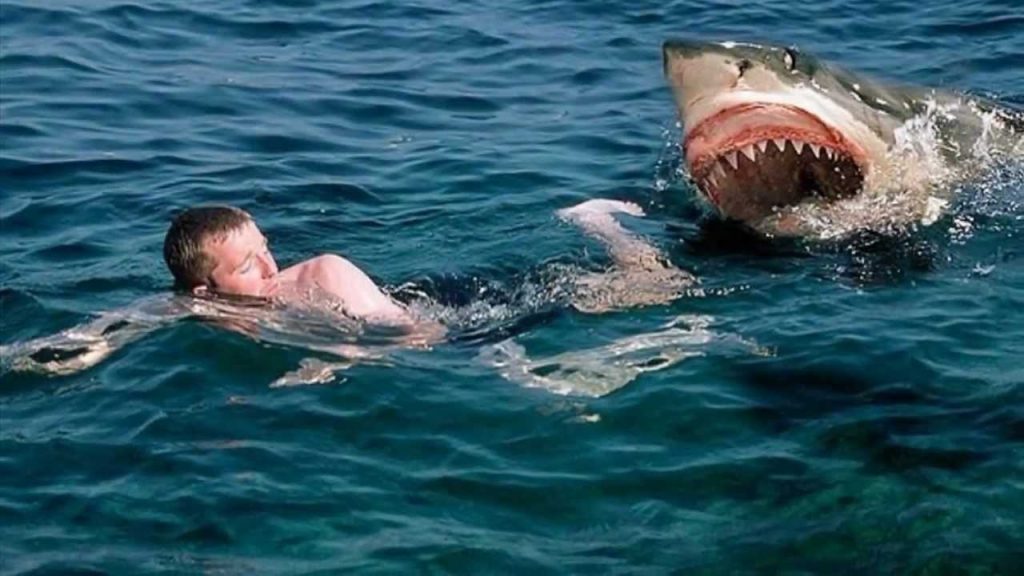
Left: Star Wars (Copyright: 20th Century Fox) Right: Jaws (Copyright: Universal Pictures)
From then on, the most significant developments have been the usage and ongoing improvement of computer- generated visual effects (and later- on CGI) and the invention of computer- animated films. Jurassic Park (1993) was one of the first movies, which employed computer- generated effects. Toy Story (1995) was the first fully computer- animated movie.
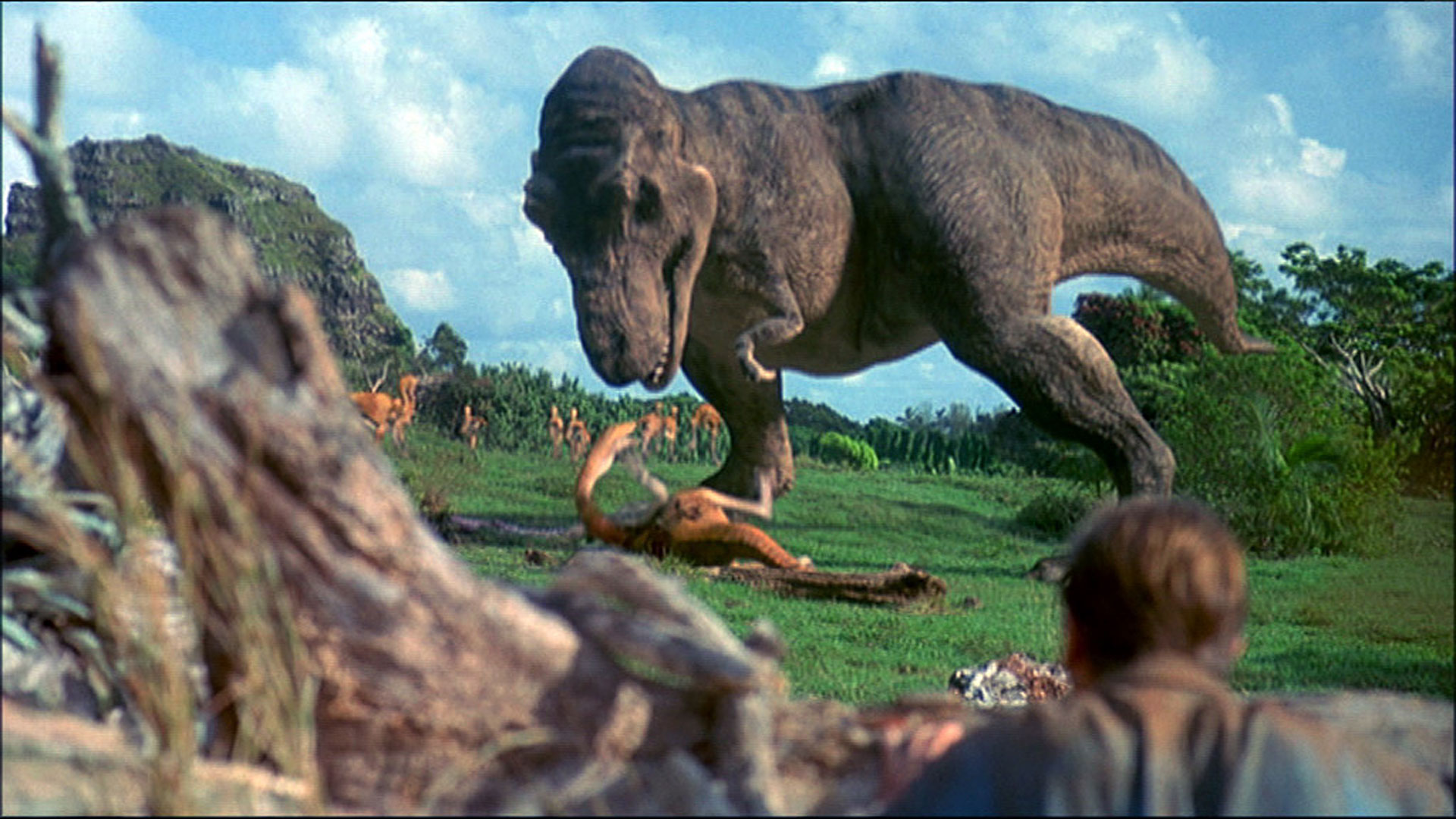
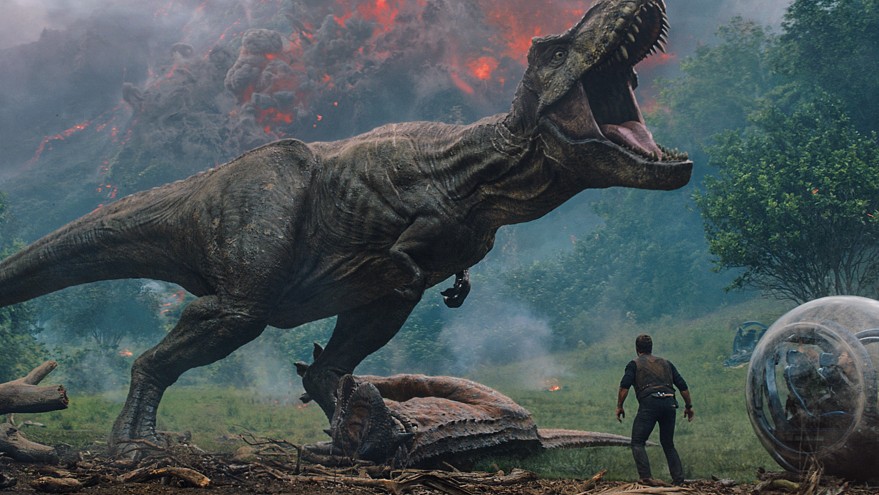
Left: Jurassic Park (1993) Right: Jurassic World (2015)
Copyright: Universal Pictures
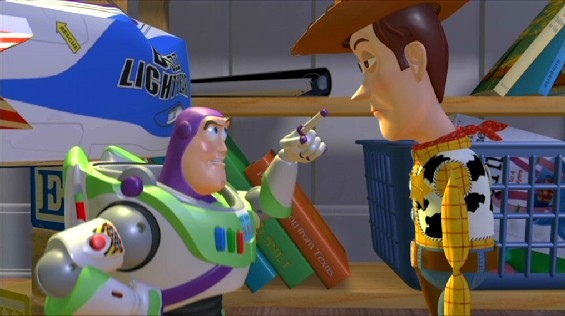
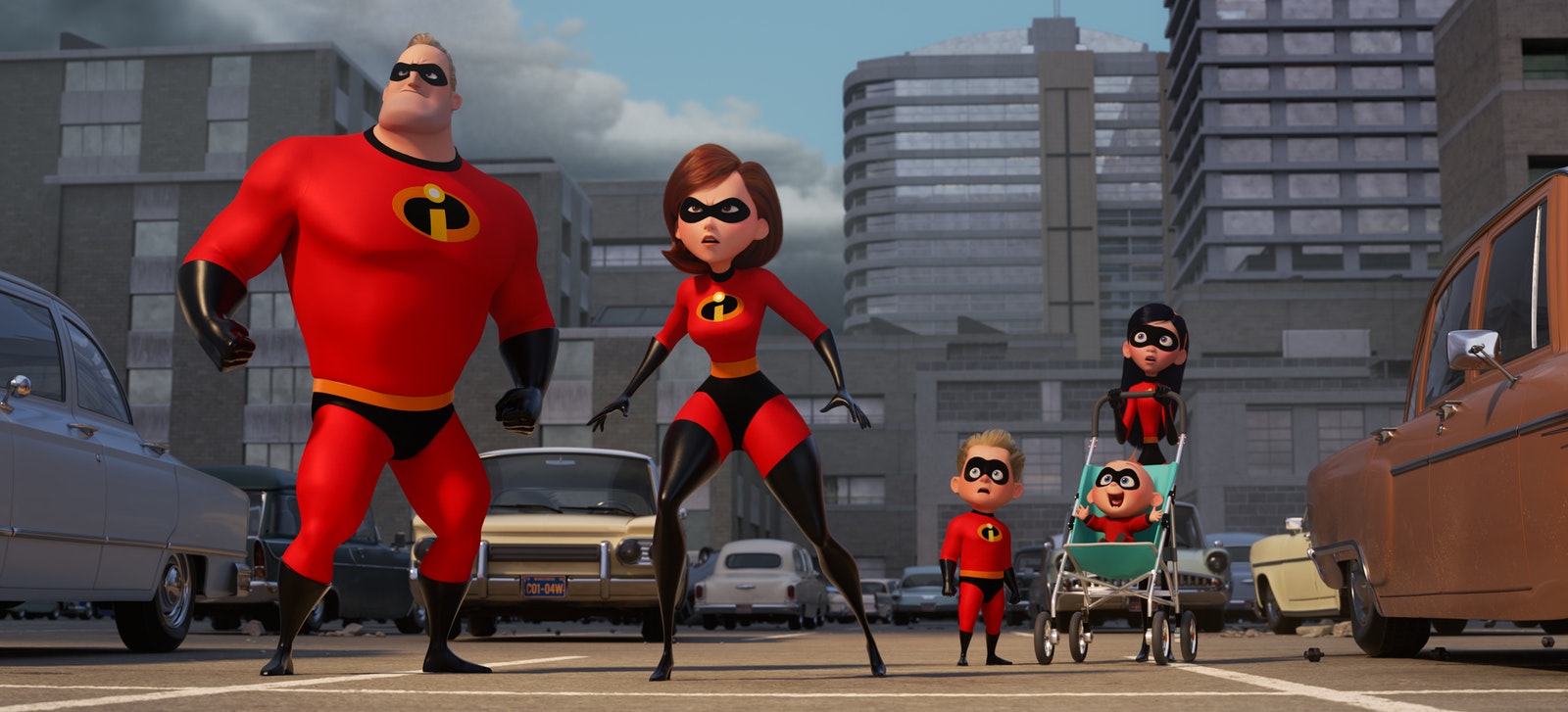
Left: Toy Story (1995, Copyright: Buena Vista Pictures) Right: Incredibles 2 (2018, Copyright: Walt Disney Pictures)
As you can see, a lot has changed in the film making business and things are still developing, especially in the digital area. I hope you liked this post. Let me know in the comments! 🙂
Sources I used:
Britannica
University of Minnesota, open library
Wikipedia
US history.com
Title image source
 sarahtalksfilm
Congratulations to this
LikeLike
A great article, congratulations!
LikeLiked by 1 person
Thanks a lot 🙂
LikeLike
Finally made time to read this post 😍It captures all the necessary steps in the film development journey – I recognized all of it from my Film Studies seminar 😉 Amazing job! ❤️
LikeLiked by 1 person
Thanks a lot, I’m glad you enjoyed it! 😊
LikeLike